
Barrow County Arrest Records and Charges
Barrow County arrest records and court charge records describe related but different parts of the criminal process. An arrest record is created by a law-enforcement agency or jail when a person is taken into custody. A court charge record is created when an alleged offense moves into a court file through a complaint, accusation, indictment, warrant, or prosecutor filing decision.
The Sheriff's Office, city police, Georgia State Patrol, or another agency may create the arrest side. Magistrate Court may handle first appearance, bond, preliminary hearing, and warrant events. The District Attorney files or pursues Superior Court felonies, while the Solicitor General handles State Court misdemeanors and traffic-related misdemeanor prosecution. The Clerk keeps the court file once filed charges enter the court record.
The manifest capture for the Barrow County Sheriff's Office website shows the law-enforcement side of records, detention, crime tips, and public-safety links.
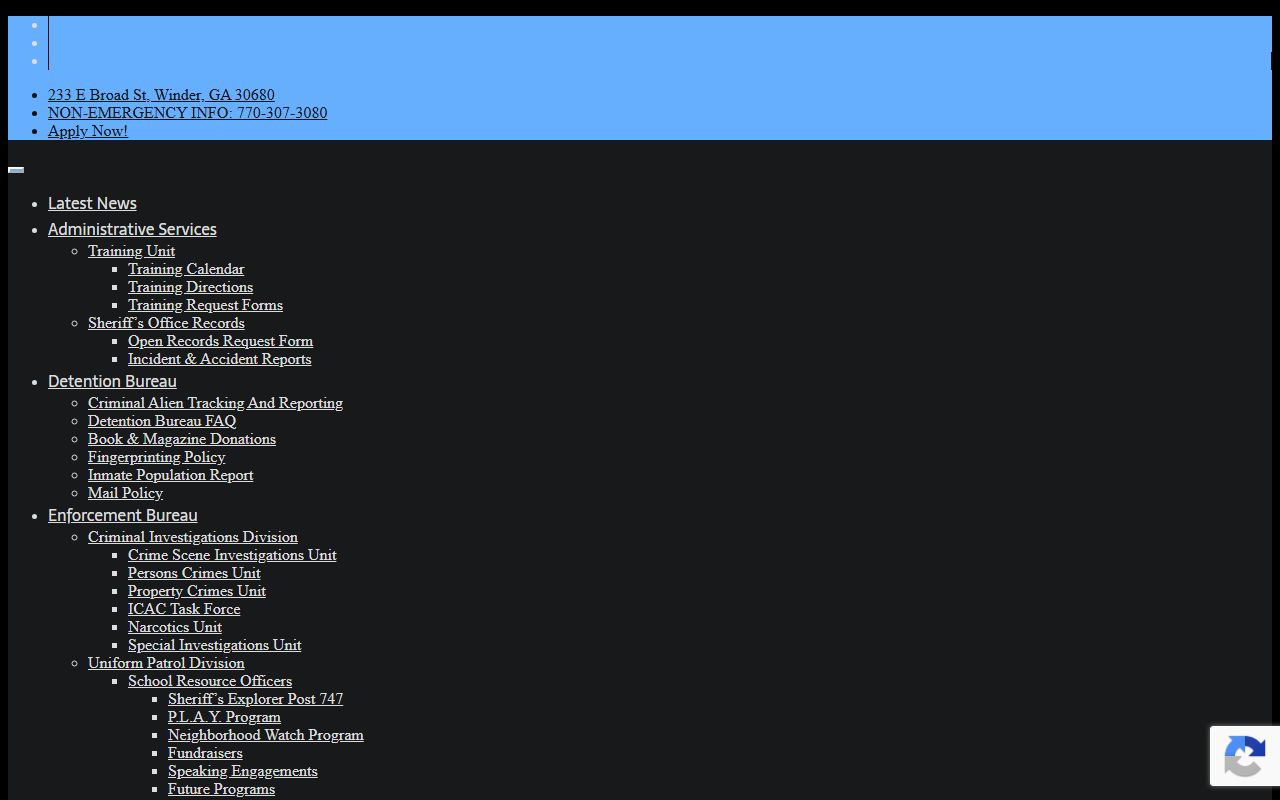
That agency path is useful for arrest and incident records, but court charges must be checked through court and prosecutor channels.
Barrow Court Charges After Arrest
Court charges after arrest may start in more than one document. A complaint can begin a lower-court or warrant-linked matter. An accusation is a prosecutor-filed charging document used for misdemeanors and some Georgia felony matters. An indictment is a grand-jury charging document for felony prosecution. The label matters because it shows who filed the charge and where the case is going next.
| Document | Typical use | Barrow County path |
|---|---|---|
| Complaint | Initial allegation, warrant, or lower-court charging basis | May connect to Magistrate Court first appearance or warrant activity. |
| Accusation | Formal prosecutor charge without grand-jury indictment | Common in State Court misdemeanor prosecution and some Georgia criminal filings. |
| Indictment | Grand-jury felony charging document | Filed in Superior Court for serious felony prosecution. |
Charge status can change. A filed charge can be amended, reduced, dropped, dismissed, nolle prossed, or resolved by plea or trial. The focused charge record should be read with the full criminal case file when an outcome matters. The broader case outcome is covered by Barrow County criminal court records.
Request Barrow County Arrest Records
Arrest reports, incident reports, accident reports, and booking records are not the same as the Clerk's criminal court file. The Sheriff's open-records page says requests must be submitted in writing, by email, or through the official form. The records email is records@barrowsheriff.com, and the records phone path is 770-307-3080 option 4. Another sheriff records page says requests may be submitted by mail and can be faxed to 770-307-3066.
- Decide whether the need is an agency arrest record, jail booking record, or court charge record.
- Use the Sheriff's records/open-records path for sheriff-created incident, accident, arrest, and booking material.
- Use the city police department if the arrest or citation was created by a city agency.
- Use the Clerk Case Search or Clerk contact path for filed court charges, docket entries, pleas, dispositions, and sentencing.
- Use Magistrate Court for warrant, first appearance, bond, and preliminary hearing questions.
The manifest capture for the Sheriff open-records request form shows the written request channel for law-enforcement records.
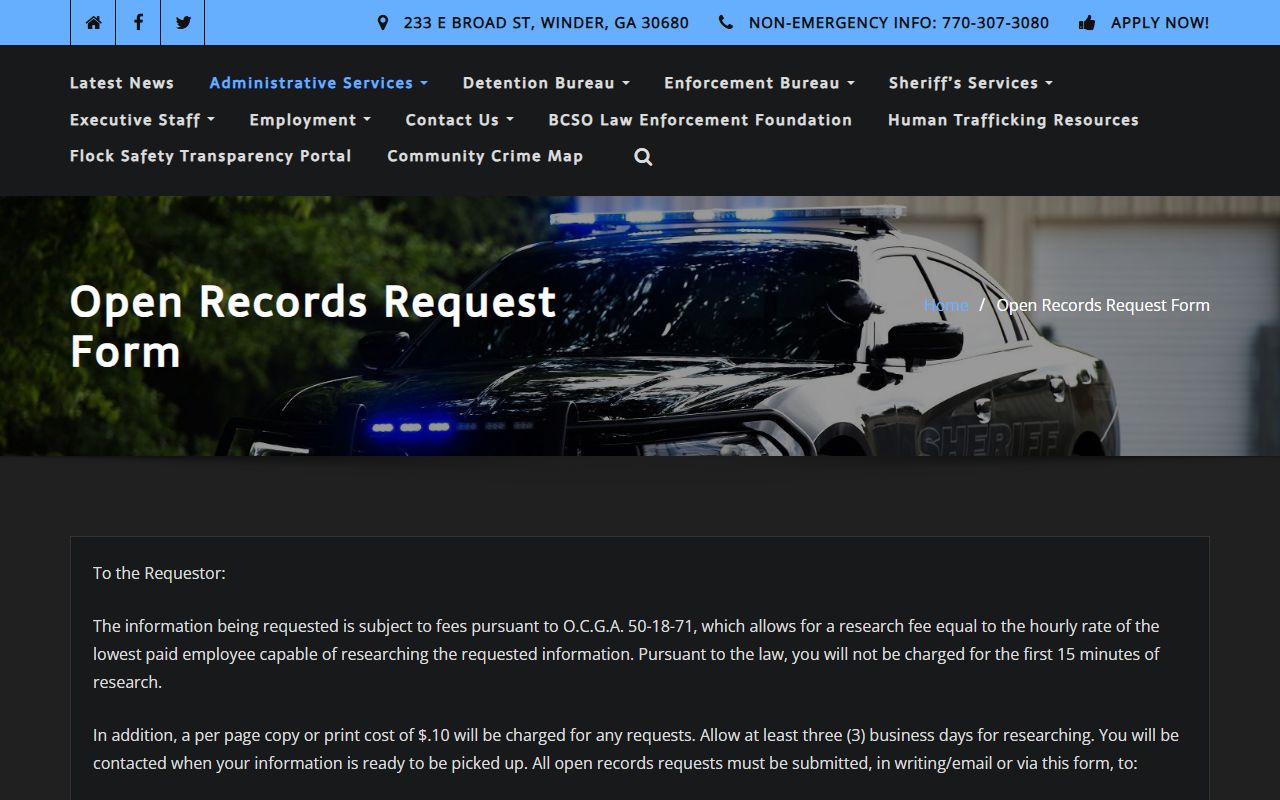
Use that form for agency records rather than asking the Clerk for a police report.
The manifest capture for the Sheriff records page shows the mail, fax, and office-hour records request path.
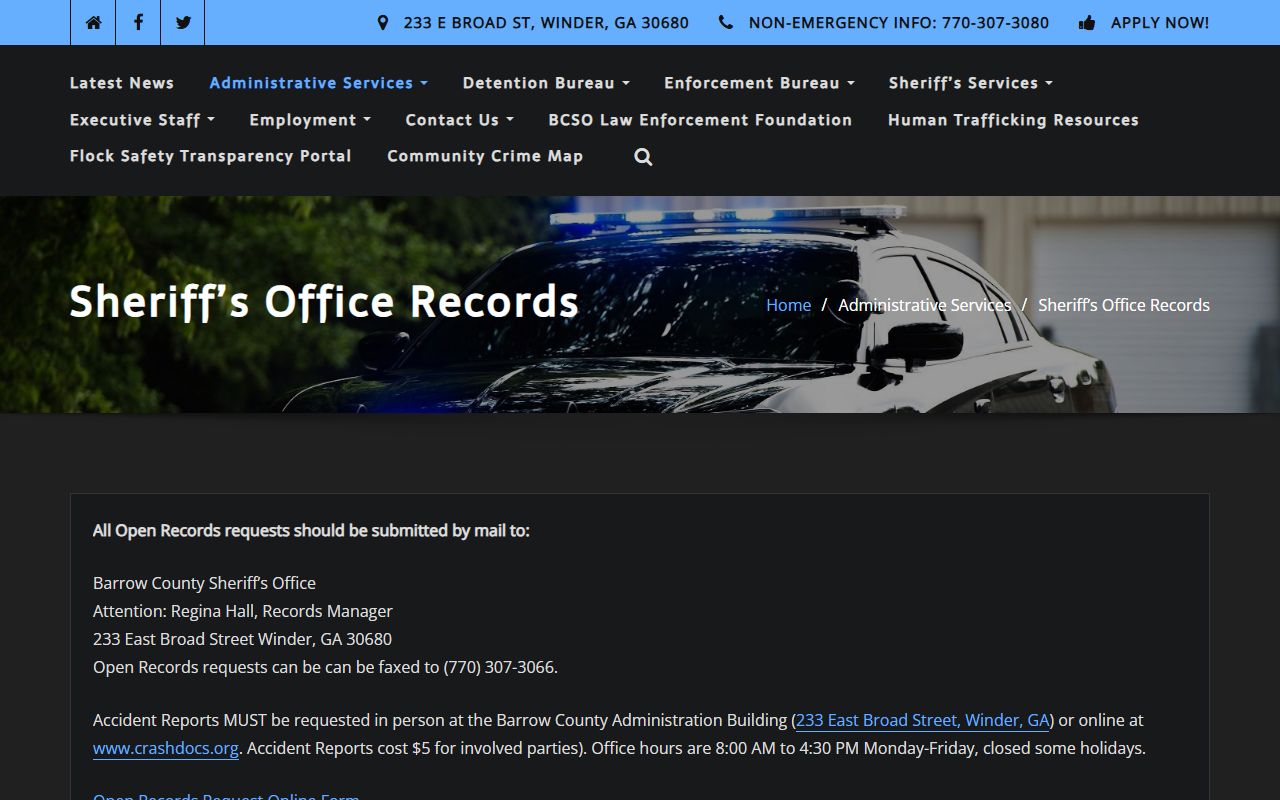
That second sheriff page is the fallback when the online form is not enough or a requester needs office instructions.
Barrow County Charge Status
Charge status terms can be easy to misread. A charge listed on an arrest report is not proof that a prosecutor filed the same charge. A charge filed in court is not proof of conviction. Each count should be checked for its current status, final disposition, and sentence before drawing conclusions.
| Status | Plain meaning | What to check |
|---|---|---|
| Filed | The charge appears in a court case | Clerk docket and charging document. |
| Amended | The charge changed after filing | New accusation, indictment, order, or docket entry. |
| Reduced | A lesser charge replaced or resolved the original | Plea and final disposition. |
| Dismissed | The charge did not continue to conviction | Dismissal order or docket entry. |
| Nolle prosequi | Prosecutor declined to pursue that charge | Prosecutor filing and court disposition. |
Charge vs Conviction
A Barrow County arrest record can show alleged offenses at booking. A court charge record can show what prosecutors filed. A conviction requires a later outcome. The same person may have an arrest, a filed charge, a dismissed count, and a conviction on a different count in one case history.
| Charge | Conviction | |
|---|---|---|
| Stage | Filed before final outcome | Entered after plea, trial, or judgment |
| Meaning | Alleged offense | Final criminal outcome |
| Where to verify | Charging document and docket | Disposition and sentencing entries |
The Sheriff's crime tips page accepts tips about wanted persons and criminal activity, but it is not an emergency line or a court record lookup. For active danger, call 911.
The manifest capture for Barrow County Sheriff's crime tips shows the non-emergency tip route.
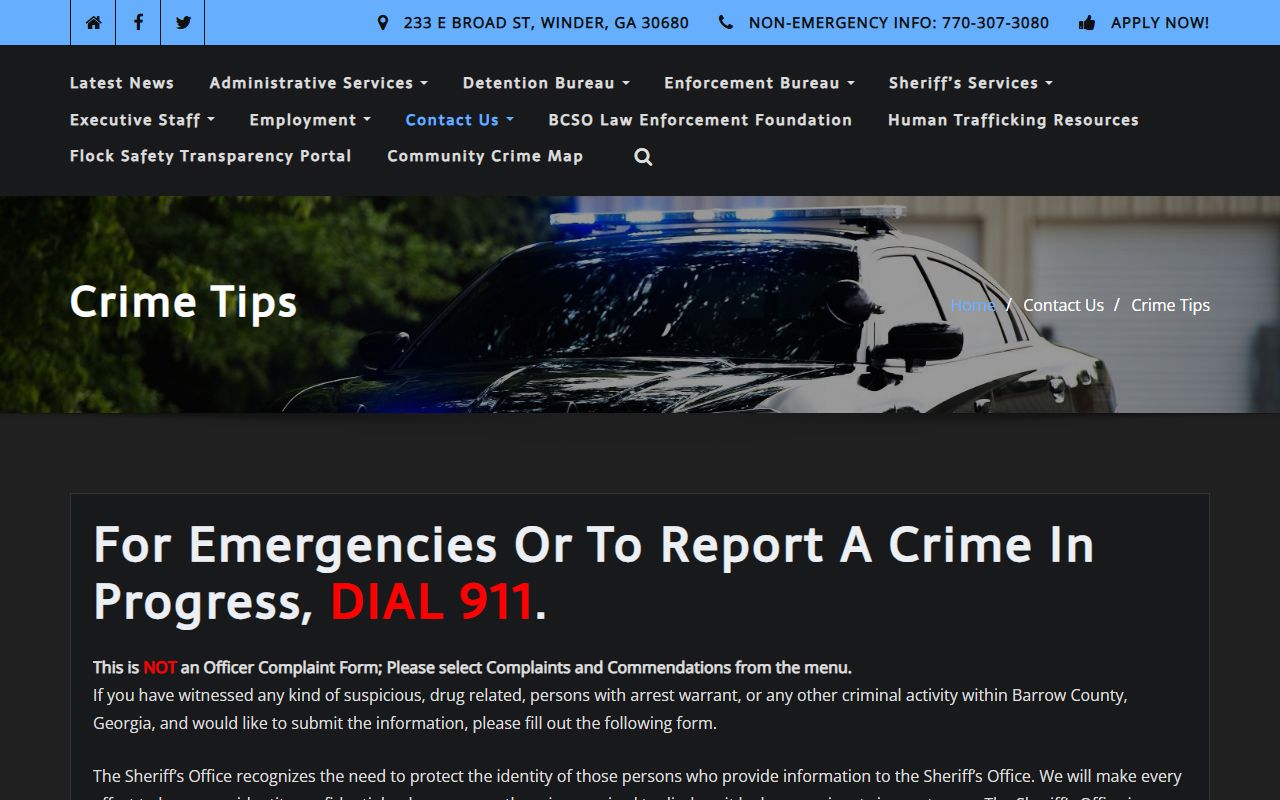
Tips can alert law enforcement, but court charge verification still requires the court or prosecutor record.
Restricted Barrow Arrest Records
Georgia law treats some records as restricted, sealed, confidential, or redacted. Juvenile law-enforcement and court records are not adult public arrest files. O.C.G.A. 15-11-708 requires juvenile records concerning a child to be kept separate and limits inspection unless exceptions apply.
Criminal-history restriction is governed by Georgia's record restriction rules. For many arrests after July 1, 2013, the prosecutor is the starting point. In Barrow County, felony matters point to the District Attorney, while misdemeanor matters point to the Solicitor General. Older arrests may start with the arresting agency. Restriction may limit public access; it does not always erase every law-enforcement or court record.
The manifest capture for Georgia juvenile record limits shows the statute relevant to juvenile law-enforcement and court files.
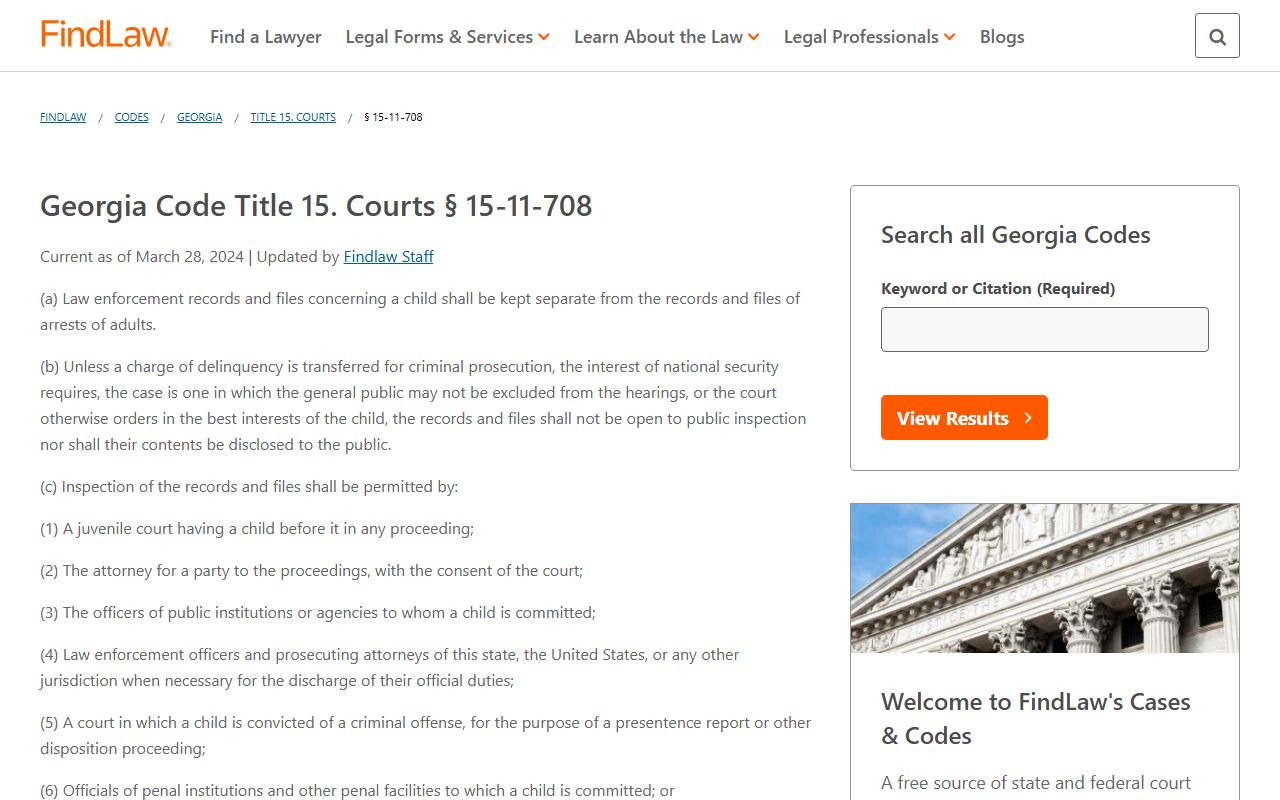
That statute is the reason juvenile arrest and court charge material should not be treated as a normal adult record search.
Public Record Search
Sponsored Results