
Barrow County Criminal Court Records
Barrow County criminal court records are the court case files created after a criminal matter enters the court system. They are different from a booking record, incident report, jail roster entry, or criminal-history summary. The court file tracks charges as filed, arraignment, pleas, motions, hearings, verdict or plea, disposition, sentence, probation, fines, and appeal activity when present.
Superior Court handles felony criminal cases in the Piedmont Judicial Circuit. State Court handles misdemeanor criminal offenses alleged in Barrow County, including many traffic-related misdemeanors. Magistrate Court creates early criminal case activity through arrest warrants, search warrants, good behavior warrants, first appearances, bonds, preliminary hearings, and warrant application hearings. The Clerk of Superior Court maintains the court record once the case is filed.
Barrow County Criminal Case Flow
The criminal court record grows as the case moves from allegation to court action. An arrest or warrant can come first, but the court record becomes most useful when prosecutors file formal charges and the Clerk records docket events.
Charges filed > Arraignment > Pretrial motions > Plea or trial > Disposition > Sentencing > Probation, fines, appeal, or closure.
District Attorney Brad Smith prosecutes Superior Court felony matters for the Piedmont Judicial Circuit. Solicitor General B. Kyle Thompson represents the state in misdemeanor criminal cases, including traffic citations, in State Court. Magistrate Court may appear in the same case history because first appearance, bond, preliminary hearing, and warrant activity often occur before a felony or misdemeanor reaches later prosecution stages.
The manifest capture for Barrow County Magistrate Court shows the court's criminal jurisdiction, including warrants, first appearances, bonds, and preliminary hearings.
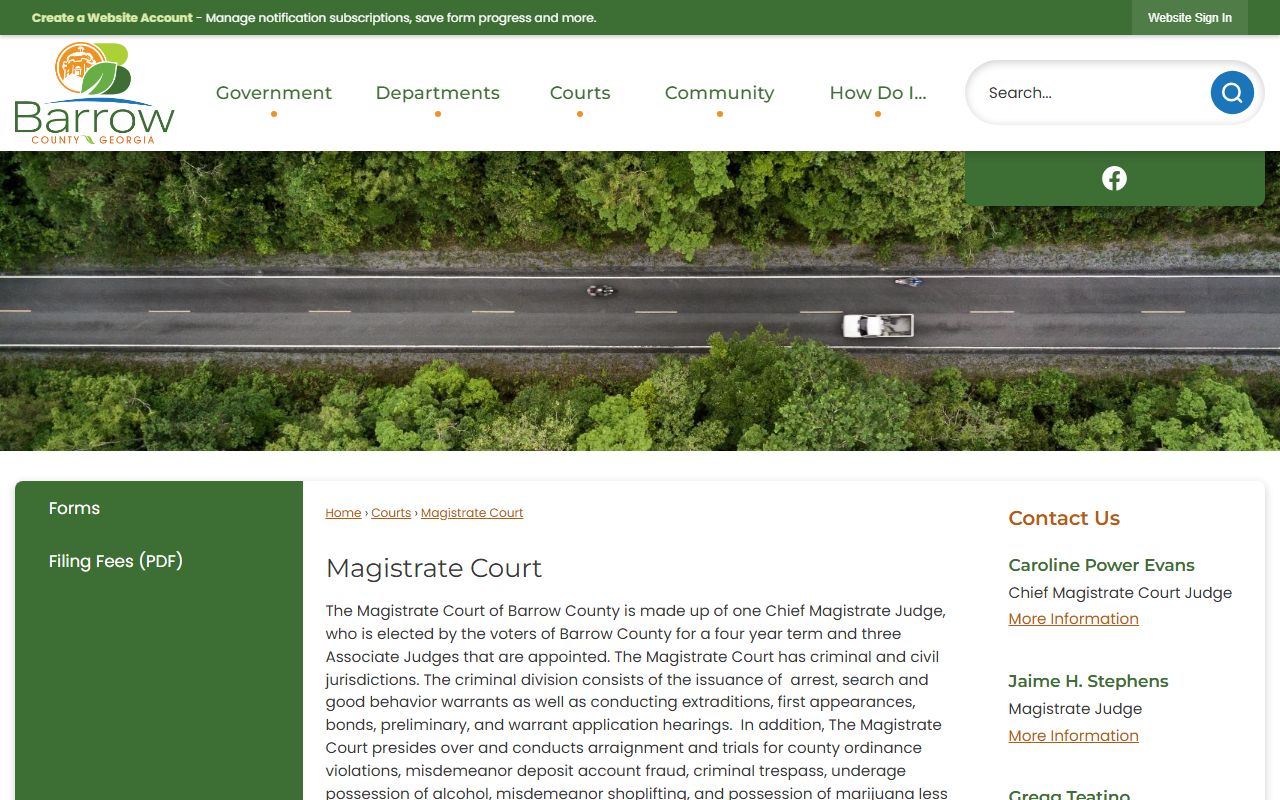
Those early events can appear before a full felony or misdemeanor case file is complete.
Barrow Criminal Record Fields
A Barrow County criminal court record can contain filed charges, court dates, judge assignment, bond events, pleas, motions, orders, disposition, sentence, probation, restitution, fines, and appeal transmission. Some information may be redacted under Georgia filing rules, especially protected identifiers, victim details, and minor-related facts.
| Field | What It Shows |
|---|---|
| Charge or count | The offense filed by indictment, accusation, information, or complaint. |
| Arraignment | The court event where charges are read and a plea is entered. |
| Plea | Guilty, not guilty, nolo contendere, or another formal response. |
| Motion | A request for a court order, such as suppression, bond change, or continuance. |
| Disposition | The outcome of each charge, such as dismissed, nolle prosequi, guilty, or convicted. |
| Sentence | Jail, prison, probation, fines, restitution, treatment conditions, or other court orders. |
Barrow County Criminal Prosecutors
Felony criminal records connect to the District Attorney. The Barrow County District Attorney page lists Brad Smith at 652 Barrow Park Drive, Suite A, Winder, GA 30680, phone 770-307-3040. The District Attorney represents the state in Superior Court criminal cases and related appeals from Superior Court.
Misdemeanor records connect to the Solicitor General. The Barrow County Solicitor General page lists B. Kyle Thompson at 652 Barrow Park Drive, Suite J, phone 770-867-1916, Monday-Friday 9 a.m.-5 p.m. That office represents the state in misdemeanor criminal cases, including traffic citations.
The manifest capture for Barrow County District Attorney shows the felony prosecution office contact path.
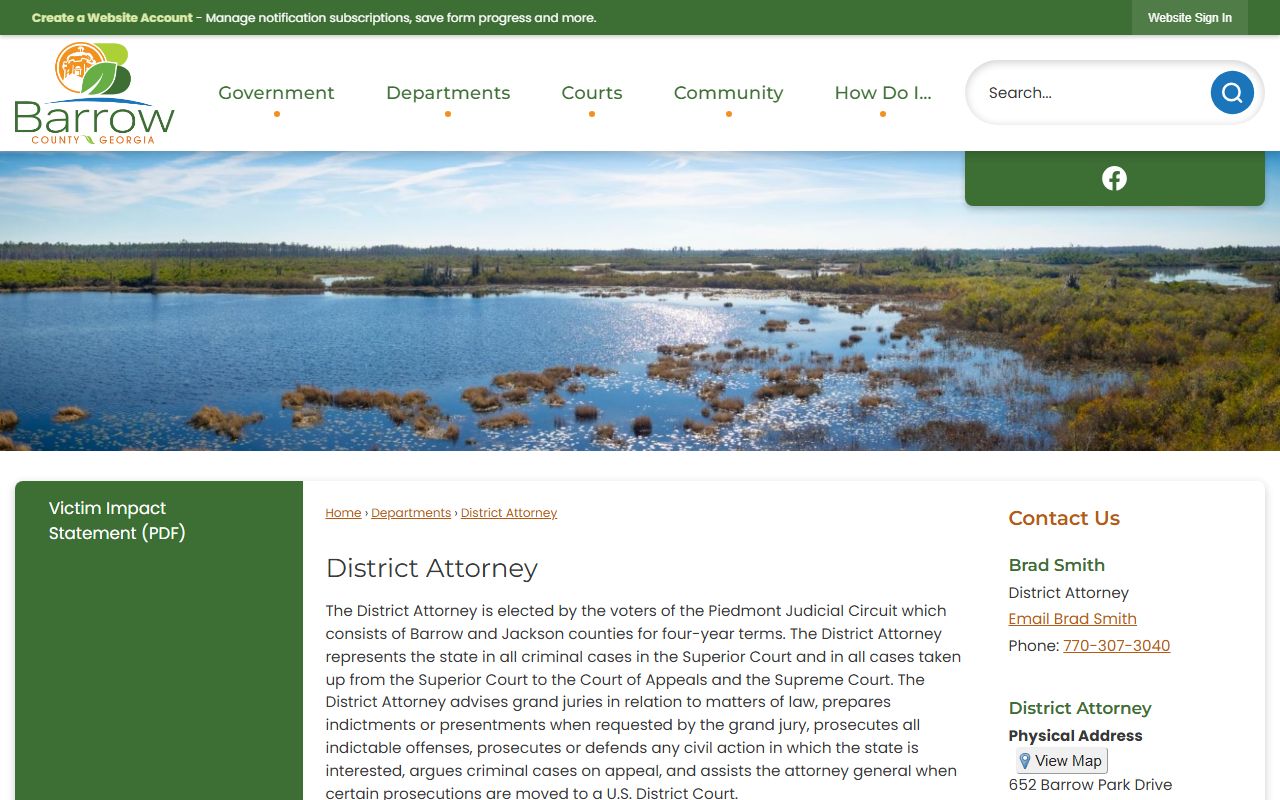
Felony charge decisions and Superior Court prosecution records are tied to that circuit office.
The manifest capture for Barrow County Solicitor General shows the misdemeanor prosecution office.
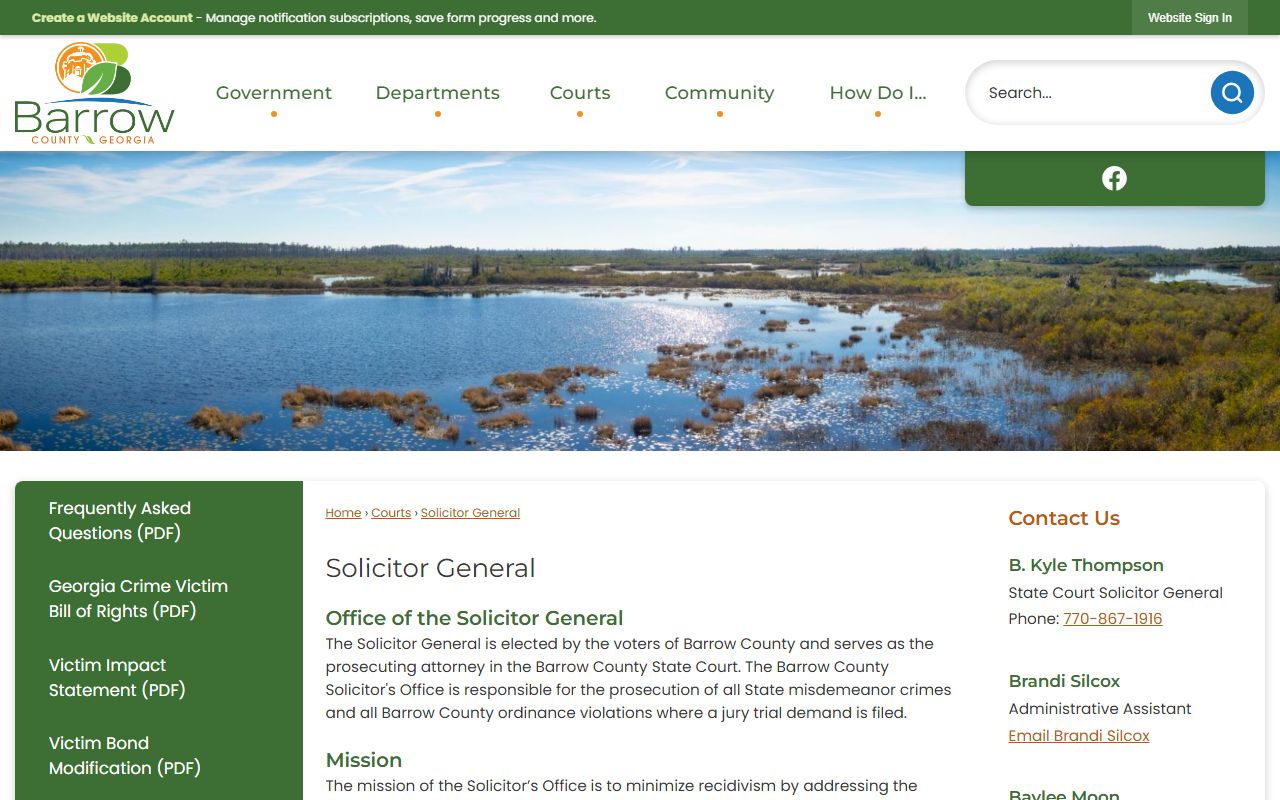
State Court misdemeanor and traffic prosecution records should be read with that office's role in mind.
Charges vs Convictions
A charge is an allegation filed or pursued in court. A conviction is an outcome after a guilty plea, verdict, or other adjudication that results in conviction. A Barrow County criminal court record may list several charges, and each charge can end differently.
| Charge | Conviction | |
|---|---|---|
| Meaning | Alleged offense filed in court | Final outcome establishing guilt or liability |
| Timing | Appears early in the case | Appears after plea, trial, or judgment |
| Record risk | May be amended, reduced, dismissed, or nolle prossed | May trigger sentence, probation, fines, and criminal-history reporting |
For charge-level detail after an arrest, the focused path is the Barrow County arrest records and court charges page. For the full case file and outcome, stay with the criminal court record.
Restricted Criminal Court Records
Georgia record restriction is not a promise that all court and law-enforcement records vanish. O.C.G.A. 35-3-37 controls many criminal-history restrictions. For arrests after July 1, 2013, GBI directs people to contact the prosecutor. For older arrests, the starting point is the arresting agency.
Sealed and restricted court materials may also involve O.C.G.A. 9-11-7.1, protected identifiers, juvenile rules, and court sealing procedures. Juvenile law-enforcement and court records are not adult public arrest files. Adoption and certain protected-order information also require care.
| Sealed Record | Restricted Record | |
|---|---|---|
| Access | Unavailable to the public except by law or court order | Limited for public or non-criminal-justice use |
| Typical path | Court order or statute | Prosecutor, arresting agency, or court process |
| Effect | Public copy may hide the filing | Public access may be limited without destroying all records |
The manifest capture for GBI record restrictions shows the state criminal-history restriction path.
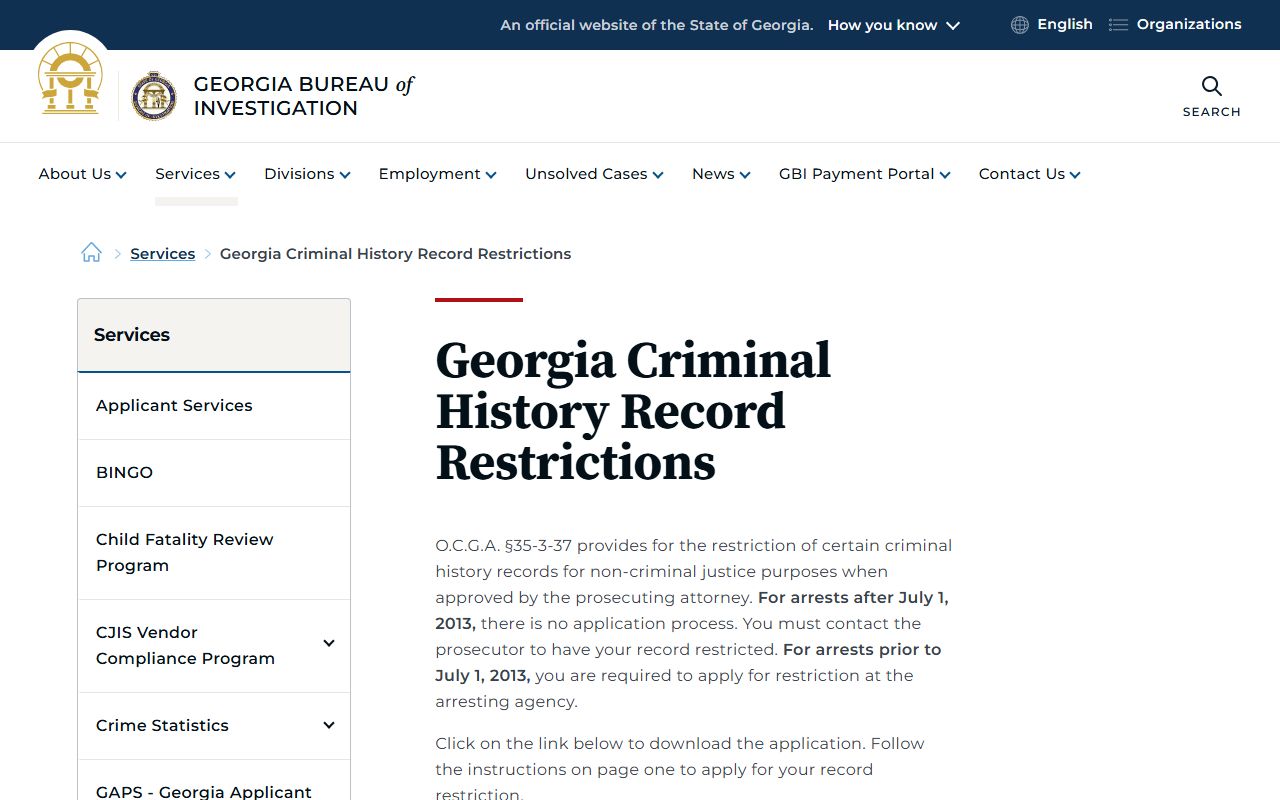
That state process affects criminal-history access, while the court file may still require separate court handling.
The manifest capture for Georgia Courts self-help record restrictions shows additional statewide court resources.
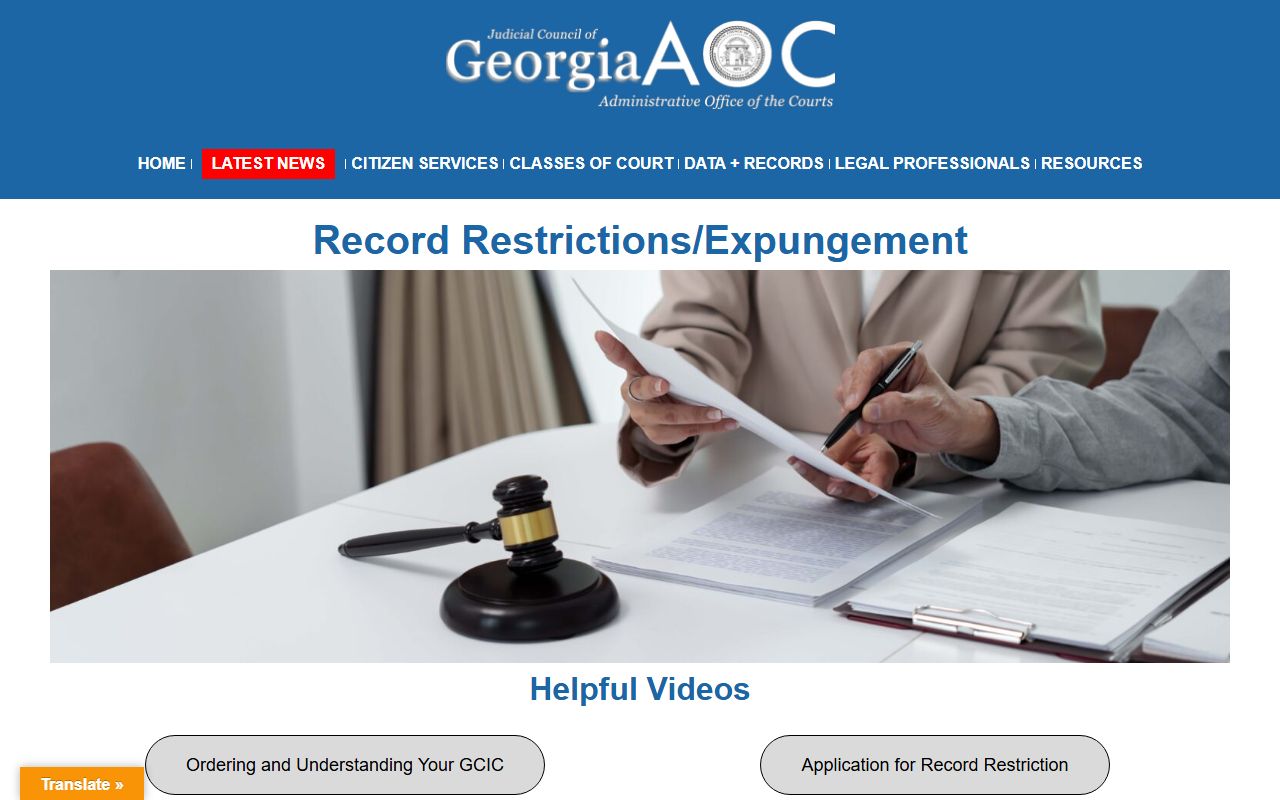
Use those resources for restriction concepts, then confirm the Barrow prosecutor or court path for the specific case.
The manifest capture for O.C.G.A. 9-11-7.1 shows Georgia's protected-identifier filing rule.
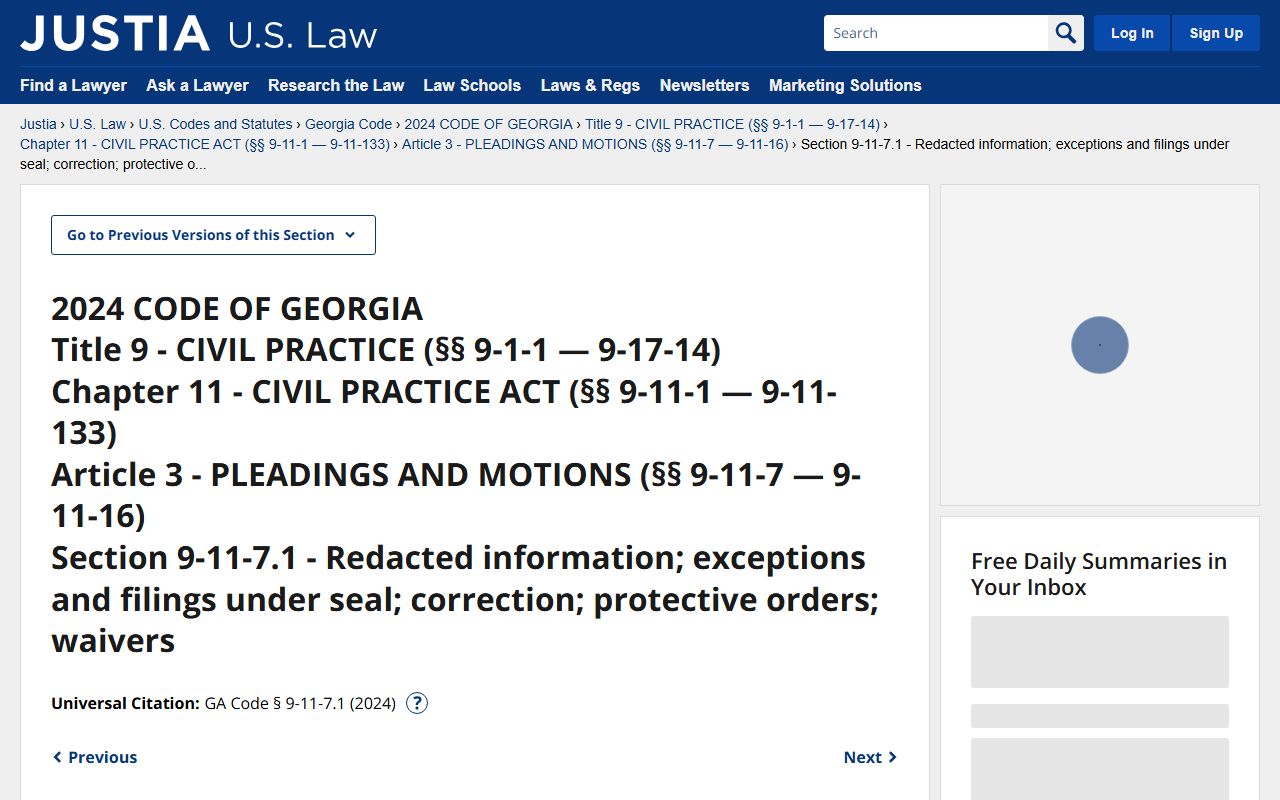
That rule explains why public criminal court documents may omit sensitive identifiers even when the docket is public.
Public Record Search
Sponsored Results